What Jev actually costs vs GPT-4o, Claude, and Gemini for call-center ticket classification
Say you run a call center. A user calls in, tells the call-center system what their problem is, and something has to decide which department picks it up — billing, technical support, returns, whatever departments you have. That routing decision is a classification problem: take a free-text user story, output one of N labels.
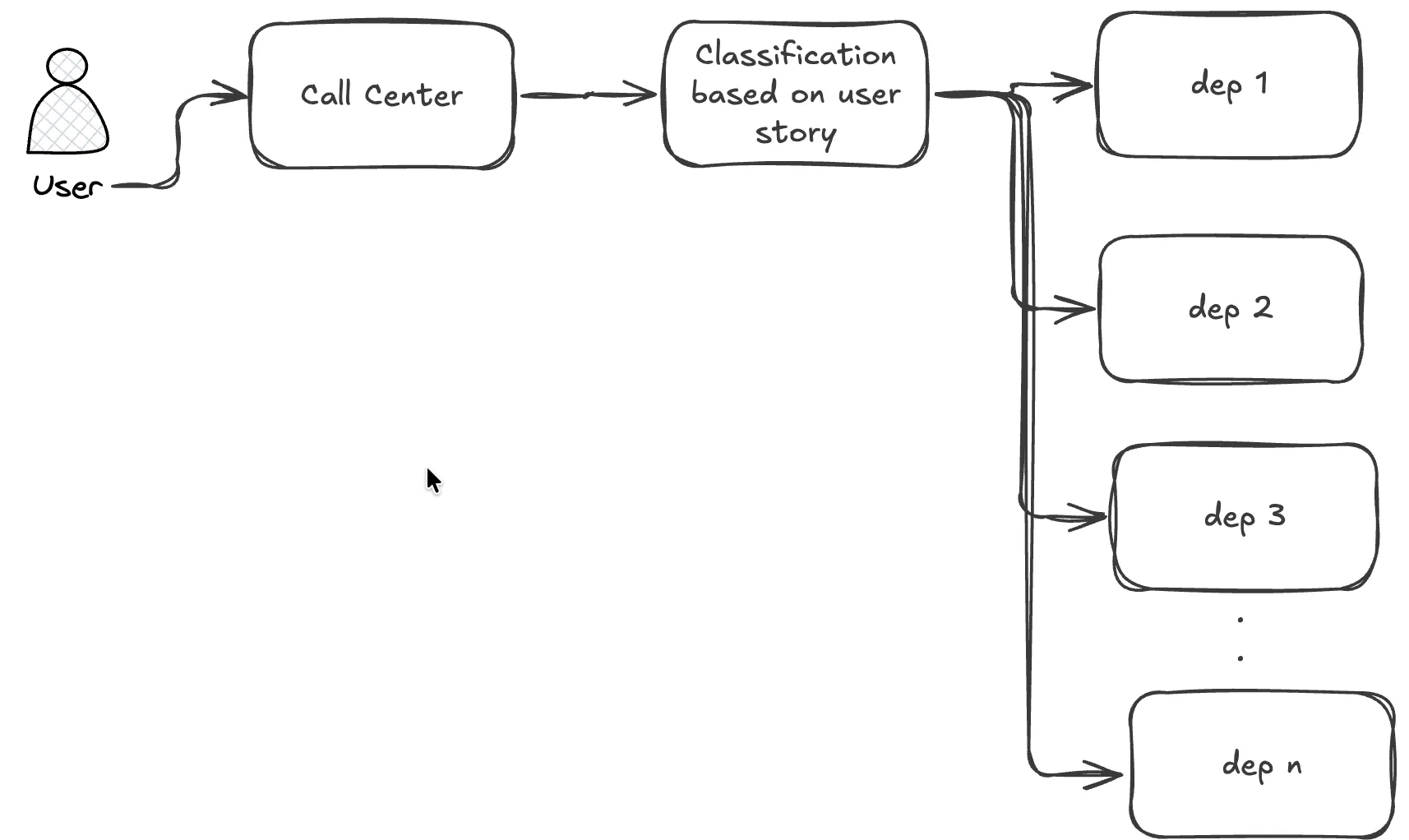
That classification step is exactly the kind of call I wrote about with Jev — a “System One” decision, not a conversation. Most teams solve it by pointing a general-purpose LLM at the ticket and asking it to pick a department name out of a list. That works, but you’re paying a text-generation model to do a five-way (or fifty-way) enum lookup.
So what does that actually cost, model by model, at your volume? Play with the numbers below.
Live cost calculator
| Model | Input $/M | Output $/M | Monthly cost |
|---|
Assumes 1 output token per call (a department label) for the text-generating models — the realistic best case for them. Jev's output is free regardless, since it returns a scored choice rather than generated text. Pricing is each provider's public list price as of September 2026; see sources below.
What the numbers actually say
Slide the token count up and Jev’s advantage grows, because it’s the only model in the table with no output cost and the lowest input rate by a wide margin — at 300 input tokens and 100k calls/month it runs about $1.26/month against GPT-4o-mini’s $4.56 and GPT-4o’s $76. That tracks with TypeSafe’s own “444x cheaper” claim in the ballpark, though not exactly — their number comes from a specific internal workflow, not this exact math.
But drag the token count down toward the low end — a short ticket, 30-40 tokens — and the gap compresses hard, because at 1 output token per call, none of these models are actually output-cost-bound. The comparison is almost entirely about the input rate, and Jev wins that on rate alone, not because it avoids output tokens. If your provider’s output-token assumption is wrong — say your classifier prompt makes GPT-4o ramble a two-sentence justification before the label — GPT-4o’s real cost is far worse than what’s shown here. The calculator assumes disciplined structured output (function calling / JSON mode) from every model; an unconstrained chat completion would blow this comparison up in Jev’s favor even further.
The other thing the multiple hides: none of this is your total pipeline cost. If you’re currently running a fine-tuned BERT-style classifier for the same job, its per-call cost is probably lower than all six of these, including Jev — you’re just paying for the training pipeline and labeled data up front instead of the per-call rate. Jev’s pitch isn’t “cheapest possible classifier,” it’s “cheapest possible classifier that needs zero task-specific training.” Whether that trade is worth it depends on how many separate classification points you have and how often building each one a bespoke fine-tuned model would actually be worth the labor.
Sources: TypeSafe AI — Introducing System One Models and Jev, OpenAI API pricing, Anthropic Claude pricing, Google Gemini API pricing.